The risks that don't sit on a map neatly
Specialty classes pose the hardest exposure questions: a political violence event hitting several policies in one city, a cyber event spreading across clients, a space asset with one failure point.
Exposure management for specialty leans on scenarios as much as on geography.
Define the event once. Read it across every line.
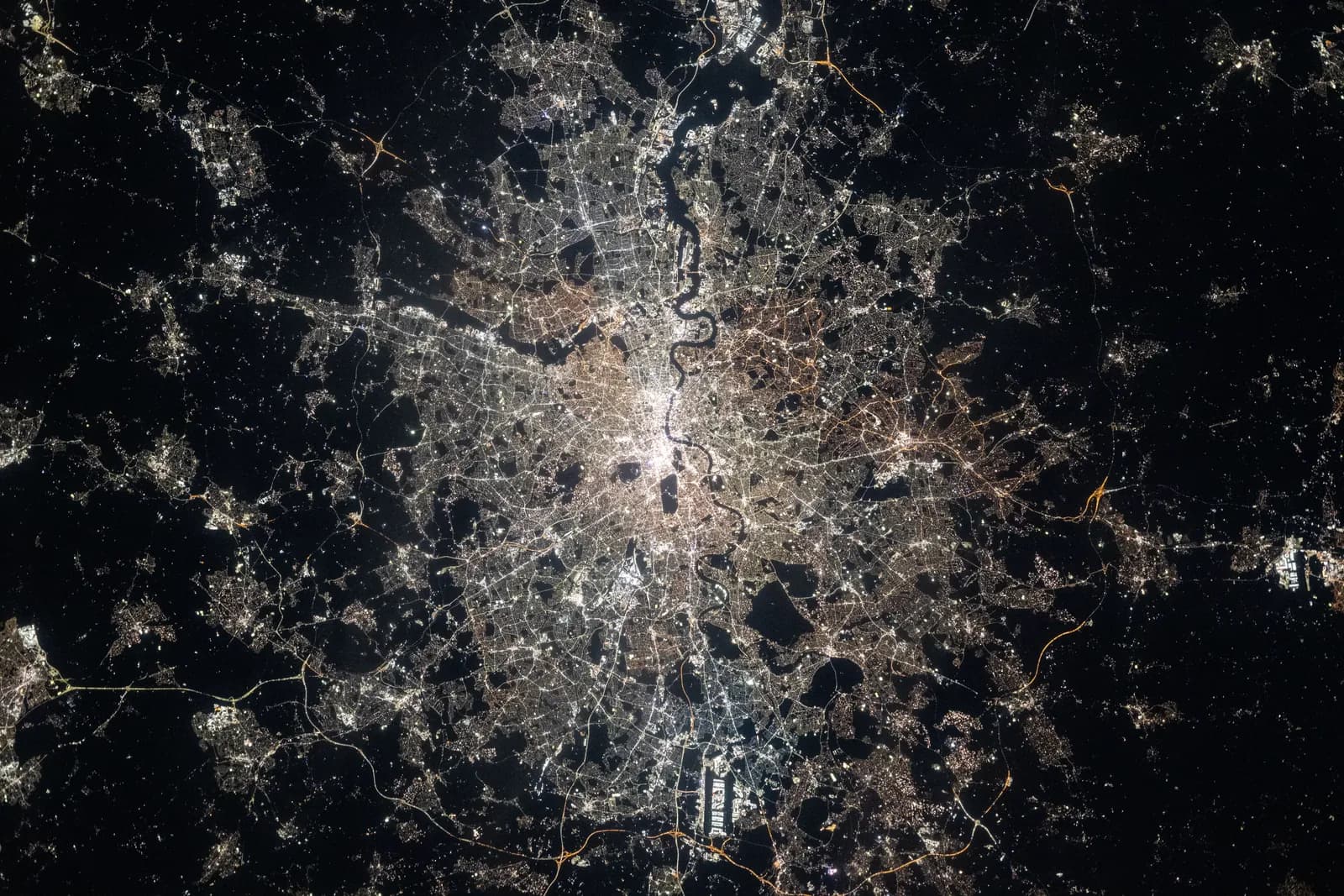
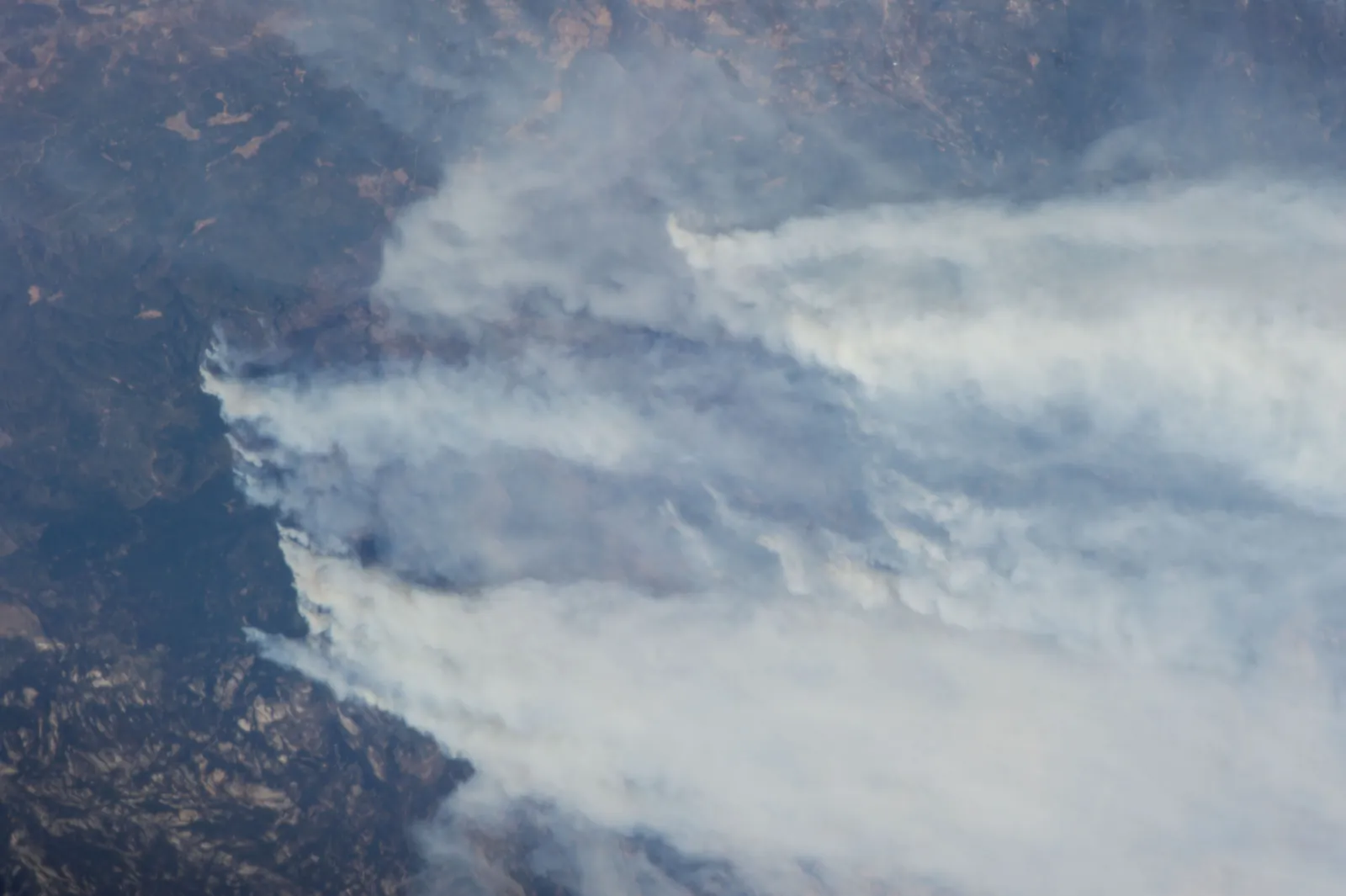 Photo: NASA

clients on one failed provider, across four lines.
A service goes down that dozens of our clients depend on. Which policies does it touch?
There is no storm track to draw and no postcode to plot. The loss runs through a dependency, and the policies that respond sit on different lines and were written by different teams, so none looks large on its own.
That is why specialty exposure is run as scenarios: define the event, apply it to the whole book, and read the answer across every line at once.
Clients that depend on the same platform fail together.
A regional outage reaches business interruption, property and travel.
Political violence in one place, several policies at once.
Define the event, read the book.
A deterministic scenario
Define the event once: a radius over a city centre. Applied to the book, it returns every policy inside it, whichever specialty class wrote it. This is the discipline behind the realistic disaster scenarios used in the Lloyd's market.
Two real events, read as exposure.
The Iberian blackout
An event that plunged parts of Spain and Portugal into chaos.
Claims surged simultaneously across business interruption, property, travel and personal lines. For exposure teams the challenge was not capital adequacy but stitching together a coherent picture in real time from information that was fragmented, incomplete or locked in silos.
Days mattered.
The M&S, Co-Op and JLR cyber attacks
They did not just hit each company's own operations; they rippled across suppliers, logistics partners and millions of customers.
A supply chain visibility crisis as much as a cyber event. Insurers covering cyber, business interruption and even liability lines faced interlinked claims with little transparency over where exposures started or ended.
Hours mattered.
Policy and asset data linked with external feeds, from energy grid operators to cyber threat intelligence.
Exposure mapped as it changes, not at month-end.
The ability to see how a single disruption cascades across property, cyber, casualty and specialty lines simultaneously.
Ebix Europe, “Seeing clearly in a crisis: why real-time exposure visibility matters”. The three points describe the article's idea of a dynamic system. Applying a scenario across lines is how a configurable, multi-line platform is used; it is not a claim about a dedicated specialty module.
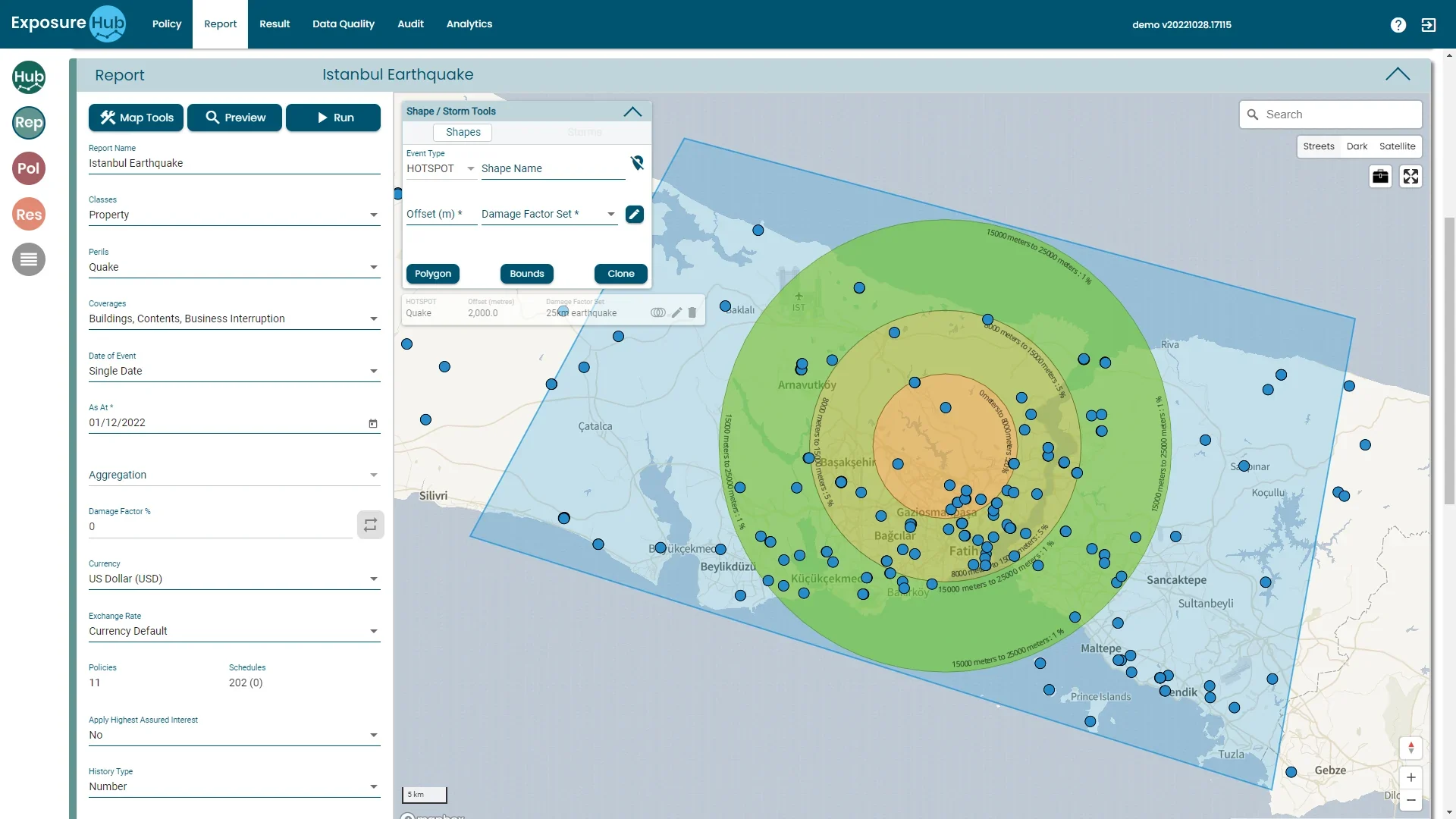
A scenario is drawn, given a damage factor, and run.
ExposureHUB demo environment · Report tab · an earthquake over demo property policies
This one is an earthquake, but the mechanism is the one specialty scenarios use: define once, apply to every policy in scope.
Scenario modelling is part of the Insight module. How a given specialty class is set up is a configuration question, which is what ConfigHub and the implementation team are for.
Public Ebix material names a dedicated module only for Energy. For specialty, this is the platform's general scenario tooling applied to your own schedules.
Ask the book what the scenario does.
The questions a team asks of this book, and what in the platform answers each.
Three ways one event becomes many claims.
Several policies sit in the same city or district and one event reaches them together. Each looks modest; the district is the concentration.
A scenario radius over the city, limits summed by policy and by class.
Clients depend on the same provider or platform, so an outage or breach is a many-client event. The M&S, Co-Op and JLR cyber attacks rippled across suppliers and logistics partners as well.
A shared-dependency view: which clients sit behind one provider, and which lines respond.
One asset, one grid or one supplier whose failure triggers many policies, as with a regional blackout reaching business interruption, property, travel and personal lines in one go.
A scenario defined once and applied across property, cyber, casualty and specialty together.
How the rollout runs: one class first, then the template.
- Specialty schedules loaded and mapped through ConfigHub
- The first scenarios defined and applied
- Outputs for management
- Each further specialty team is brought on with the same template
- Workshops with each team to agree what it needs
- Shared-dependency views for cyber and technology
- Exports for carriers and regulators
- Specialty beside property and casualty in one cross-class view
- Third-party data and threat-intelligence feeds
From an Ebix Europe customer story. The three groupings (go-live, three months after, longer term) and the one-class-first approach are the customer's; what sits in each column for specialty shows how a rollout would be scoped.
Modules involved, and the classes beside it.

See Specialty on ExposureHUB.
Book a walk-through built around your specialty schedule and the questions your team asks of it.