A specialty MGA went live one class first, then the rest.
How a fast-growing MGA that writes on behalf of other carriers put ExposureHUB to work: scoped with its underwriting teams, launched in stages, and now running across all seven of its classes of business.
- Seven classes of business live
- Property D&F first, then a template for the rest
- Reporting to every carrier, more automated
One class first. Then a template for the rest.
 Photo: NASA

classes of business live, from one template.
The rollout
Property D&F first, then six more
A customer that owes reporting to every carrier it writes for.
Without it
Weeks of manual work
A manual data manipulation exercise that would ordinarily have taken weeks, for every carrier it reports to.
With a staged go-live
Reporting, more automated
Exposure management set up so that reporting to all those carriers runs as a routine output, not a project.
As a rapidly growing MGA it also had to expand its exposure management team and capabilities quickly, and it put ExposureHUB, including the platform's client support, at the core of that effort.
underwriting teams in fact-finding workshops
exposure management stakeholders in the project
classes of business live on the platform
The published customer story gives “around 25” stakeholders.
How the rollout ran, move by move.
Agree which teams are in scope
At the outset, the customer had to agree which underwriting teams were in scope for the project.
Assemble a project team
A core project group, with around 25 exposure management stakeholders involved.
Fact-find with seven teams
Workshops with seven teams found out what each wanted from an exposure management system, so every underwriting team's requirements were explored and understood.
Go live in stages
A staggered go-live rather than seven business lines at once. Property D&F went first, so a repeatable template could be applied to the other lines.
Prioritise requirements in three groups
Go-live (the minimum viable product), Phase 2 within three months of go-live, and longer-term requirements to protect the project's future integrity and resilience.
Now running on all seven
ExposureHUB is now used across all seven classes. As the business adds underwriting teams, the platform accommodates them quickly and seamlessly.
What the team works in: schedule, event, answer.
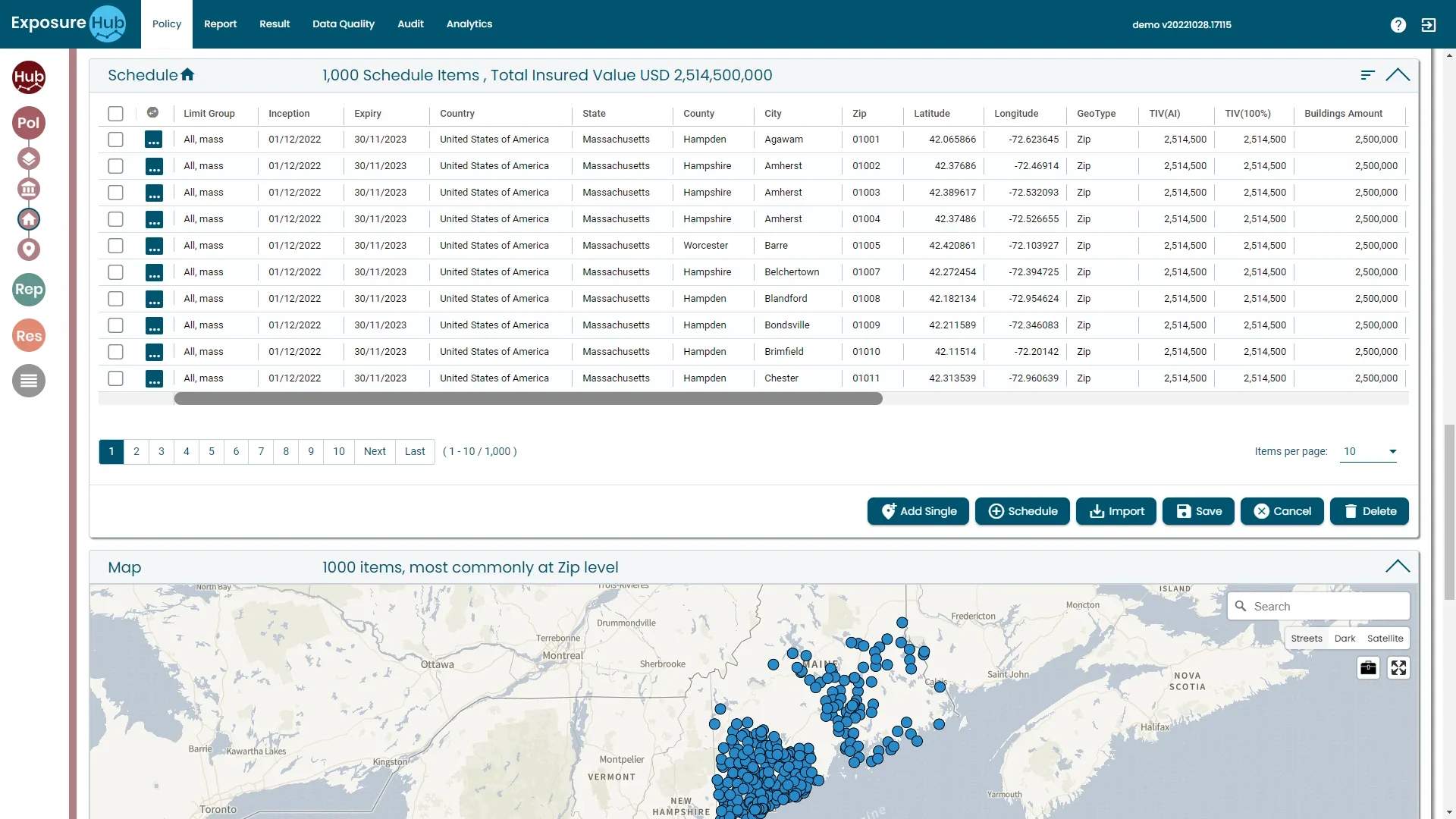
ExposureHUB demo environment · sample data, not customer data
Locations come in by import file, integration or manual entry. The schedule, its total insured value and the map of where it sits are on one screen.
Schedule items
1,000
Total insured value
USD 2,514,500,000
Map
1,000 items, most commonly at zip level
What the customer gets: a one-stop shop.
One place for the decision-makers
Behind the scenes, a one-stop shop for the key decision-makers who receive the platform's outputs.
Room to grow
As the business adds underwriting teams, the platform can accommodate them quickly and seamlessly.
Reporting as a routine output
Reporting to the carriers it writes for is more automated, rather than a manual data exercise.
Upstream systems
Where policies are written
Downstream systems
Where outputs are used
ExposureHUB
optimised and automated, one part of the policy life cycle
Key decision-makers
One place to see the platform's outputs
In the customer's own words.
“ExposureHub has become the cornerstone of our Catastrophe risk management strategy, ensuring that we not only identify potential exposures but proactively mitigate them.”
“I've witnessed first hand the transformative power of ExposureHub within our business. This cutting-edge tool has empowered us to navigate the complex landscape of risk with precision and confidence.”
Managing Director
Specialty MGA customer
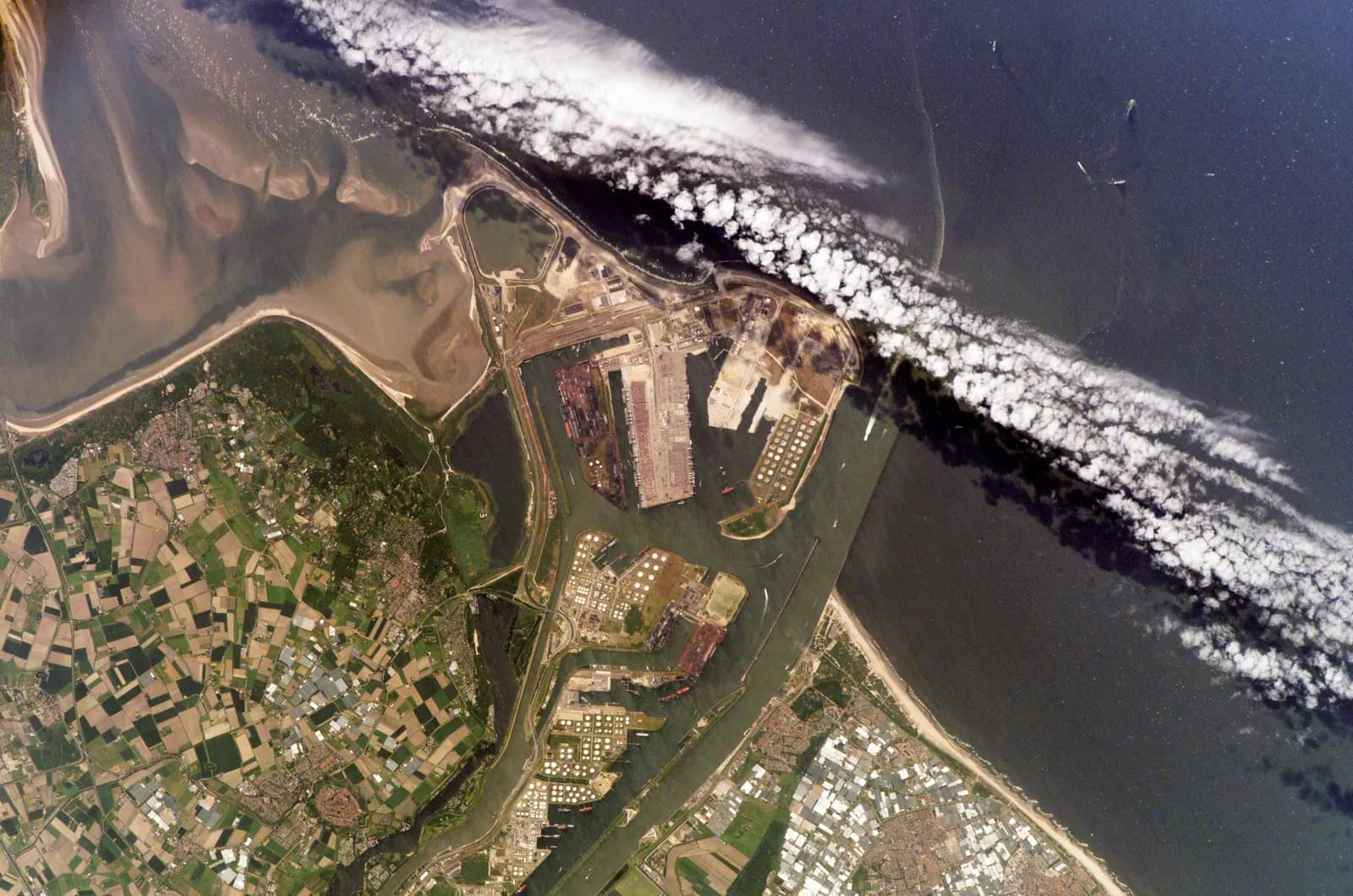 Photo: NASA
underwriting clients in the London market, and available now in the U.S.
As stated on ebixrisk.com.
Be the next to go live, one class at a time.
Tell us about your classes of business and we will outline a rollout built the same way: one line first, then a template for the rest.